Serbia's Vucic Concedes Defeat as Student List Sweeps Parliament
Voter turnout hit a 30-year high in Sunday's snap vote, ending a two-year protest movement that began after a fatal infrastructure failure.
By Priyanka Shah ·
Aleksandar Vucic, the Serbian president who has held power for over a decade, admitted defeat in Sunday's snap parliamentary elections. He conceded to the Student List, a political group formed from a youth-led protest movement. The vote marked the end of his grip on the Serbian Progressive Party (SNS) and the state apparatus he built since 2012.
The election results were decisive. Vucic's party is projected to win 105 of the 250 seats in parliament. The Student List is expected to secure between 135 and 140 seats. Voter participation reached its highest level in more than 30 years. Vucic told supporters that the loss was clear, citing sample vote counts that showed his list trailing far behind the opposition platform.
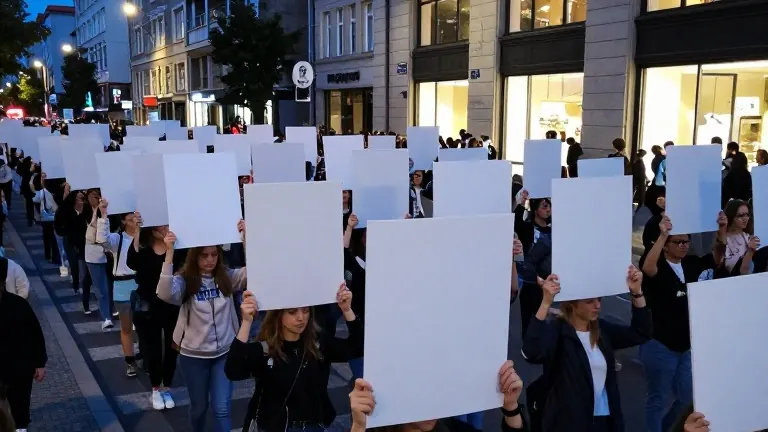
The political shift traces back to November 1, 2024. On that day, a train station canopy collapsed in Novi Sad, killing 16 people. The accident sparked a wave of unrest that lasted nearly two years. Protesters, including professors, doctors, and workers, demanded an end to corruption and the depoliticization of public institutions. The movement coalesced into the Student List, led by Ilija Srdanovic, a professor at the Faculty of Medicine in Novi Sad.
Vucic, a former ultranationalist turned pragmatic leader, had maintained ties with the European Union, Russia, and China. He described his critics as "blockaders" who sought to destabilize the country. Born in Belgrade in 1970, Vucic entered politics in 1993 with the Serbian Radical Party. He founded the SNS in 2008 with Tomislav Nikolic to move the party toward mainstream European politics. He became prime minister in 2014 and president in 2017, winning re-election in 2022.
Serbian journalist Safeta Bisevac noted that Vucic was initially less popular than his co-founder. "Vucic lagged far behind in popularity at the time and was essentially the organiser of the newly formed party," Bisevac said. After taking power in 2012, the government promised to fight corruption and organized crime. One high-profile case involved the arrest of businessman Miroslav Miskovic in 2012. Miskovic and his son were later acquitted, and the state paid them compensation.
Bisevac argued that the anti-corruption efforts yielded modest results while authorities expanded control over media and institutions. "He made many promises and fulfilled few of them, but in the meantime, he established almost complete control over the state apparatus," Bisevac said. Vucic resigned as president in September under pressure from the protests, though he retained influence over party policy. His term was originally set to run until 2027.
Political scientist Dusko Radosavljevic described the student victory as a voice for justified citizen anger. He characterized the past decade under Vucic as one of systematic pressure on social institutions. Radosavljevic stated that state intelligence services spent more time monitoring political opponents than performing their actual duties, while critical thinking was pushed out of public media.
Source: Al Jazeera